

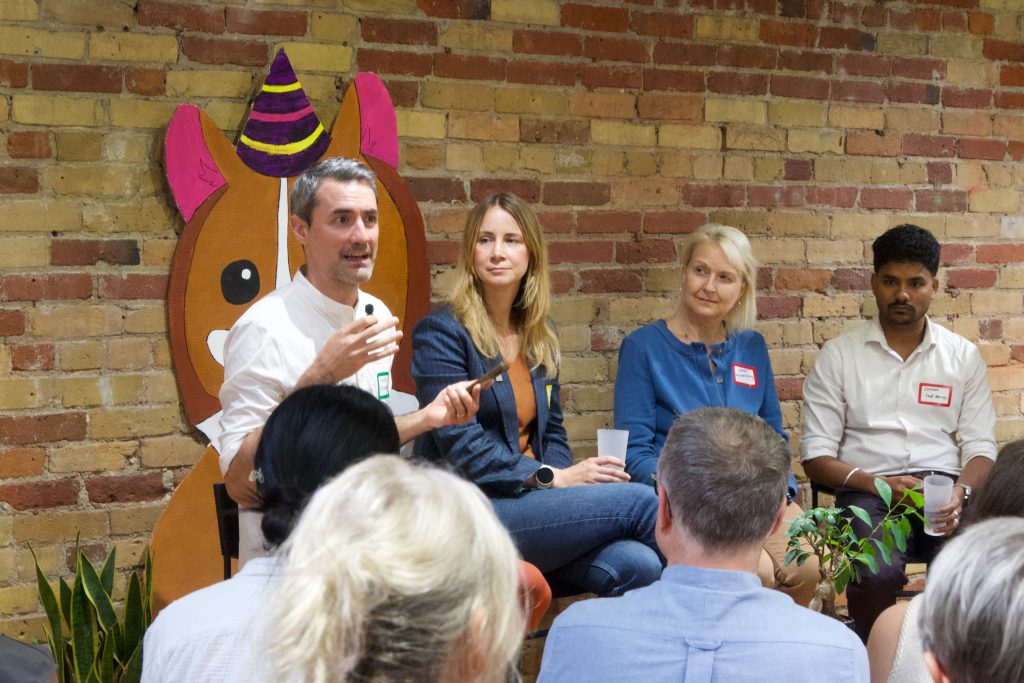


It’s the question that businesses across the food industry wrestle with every day, and the one we put to a room full of food leaders at Toronto Climate Week earlier this month.
The answer that emerged was clear, and a little counterintuitive: yes, but only if you stop treating sustainability as a cost centre and start treating it as a commercial decision.
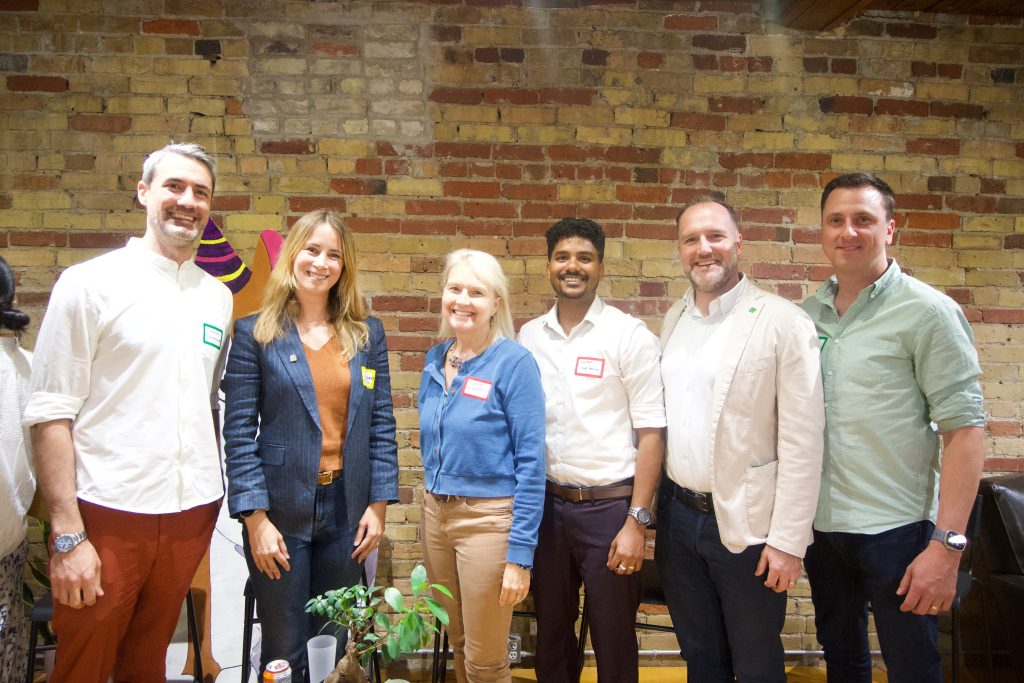
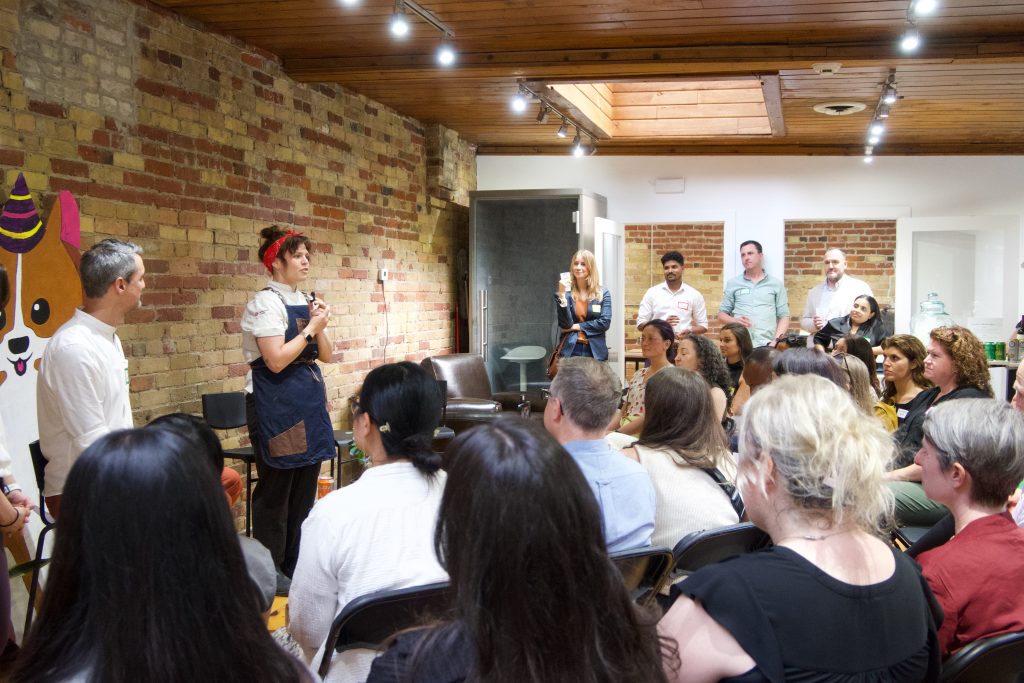
That was the throughline of our Toronto Climate Week panel, Can Sustainable Food Also Be Affordable?, featuring voices from every link in the food supply chain: a grower, a processor, a manufacturer, and a retailer. The format was intentional. As Carbonhound Growth Lead and emcee for the evening Yunji Hwang, put it: “The food system doesn’t work in silos, and neither do the answers to the questions we’ll be asking today.”
The Premise That Changes Everything: Sustainability Is a Commercial Decision
The session opened with a provocation: we often tell ourselves sustainability is the “right thing to do”, and that eventually the market will catch up and reward us for it. But the panellists, representing the full food value chain from farm to shelf, pushed back on that framing.
Sustainability decisions are commercial decisions.
That means procurement teams are choosing suppliers based on environmental standards. Retailers are making ranging decisions that account for carbon footprints. Customers are asking for product-level emissions data. And for companies that export to the EU, measuring and reporting carbon is no longer optional; it’s a condition of market access.
The businesses winning on sustainability aren’t doing it despite commercial pressure. They’re doing it because of it.
Selling Sustainability Without Selling Out on Price
We were joined for a fireside chat by Andy Tait of Good Leaf Farms, one of Canada’s leading indoor vertical farming companies. The question on the table: how do you make the business case for a product that’s more sustainably produced without pricing yourself out of the market?
Andy’s answer was grounded in something every food business should be asking: what is the real cost of conventional production once you factor in food waste, pesticide use, water consumption, and supply chain fragility?
Good Leaf’s microgreens are pesticide-free, grown in a controlled environment, and have a significantly longer shelf life than field-grown alternatives. The sustainability story isn’t a premium add-on; it’s embedded in the value proposition. Less waste for the consumer. More reliable supply for the retailer. Cleaner inputs for the manufacturer.
The implication for businesses: the strongest sustainability communications are the ones that connect directly to the customer’s experience, not just to a company’s ESG commitments.
Supply Chain Trust Is the Foundation of Sustainable Sourcing
One of the most human moments of the evening came from a conversation about what it actually takes to shift a supply chain toward more sustainable practices. The answer wasn’t technology or regulation. It was trust.
“It was always our word is our bond,” said Jennifer Robinson, Senior VP Safety, Quality & Sustainability at Bay State Milling. “We have to be truthful and honest. Even if something’s not in writing, that is what you told me. We’re going to stand behind it.”
Building sustainable supply chains requires companies to go beyond contracts and certifications. Growers need to know there’s a real market for what they’re investing in. Processors need confidence that the supply will be there. Retailers need to believe the claims on the label. None of that happens without relationships built over years.
Bay State Milling’s collaboration with Canadian oat growers, in partnership with Riverside Natural Foods and Nature’s Path, is a case in point. Over five years, they helped more than 30 growers achieve Regenerative Organic Certified (ROC) status and simultaneously created a commercial market for those products. The sustainability outcome and the business outcome weren’t in tension. They were the same outcome.
Farmers Need to Be Partners, Not an Afterthought
Dana Dickerson Ala-Pantti, Director of Market Development and Sustainability at the Grain Farmers of Ontario made a direct ask of every food business in the room: integrate farmers early.
“We get approached every day by companies that [say], ‘We want to build a sustainability program with your farmers. We want to measure X, Y, or Z,'” she noted. “And the first thing we tell them is: have you talked to the farmers yet?”
Too often, sustainability programs are designed at the corporate level and handed down to producers as a new set of requirements with no commercial benefit attached. That dynamic breeds resistance, not buy-in.
The Grain Farmers of Ontario have distilled their experience into a practical resource: Sustainability Program Principles: A Guide to Partnering with Grain Farmers for Farm Sustainability Outcomes. It’s a guide to doing this the right way. The core message: sustainability programs work when farmers are co-designers, not just data providers.
The Data Problem and the Opportunity
Across both sessions, one theme emerged again and again: you cannot manage what you cannot measure.
Businesses up and down the food value chain are being asked to provide emissions data, supply chain disclosures, and verified sustainability claims by customers, investors, and increasingly by regulation. The companies that have invested in data infrastructure are finding it to be a competitive differentiator. The ones that haven’t are scrambling to catch up.
The good news: the tools to do this exist, and the cost of measuring is coming down significantly. What was once a resource-intensive process reserved for large multinationals is now accessible to mid-market food businesses.
When sustainability data is treated with the same rigour as financial data (collected systematically, reviewed regularly, and used to inform decisions) it stops being a reporting burden and starts becoming a strategic asset.

“A drop in the bucket is such an excuse not to do our part. A drop in the bucket can overflow a bucket.”
Georgia Zimbel
Cofounder, Cheffing4Food
What Businesses Need to Do Now
The evening made clear that the window for treating sustainability as optional is closing. Here’s what we heard from the panellists:
1. Reframe sustainability as risk management. Climate risk is supply chain risk. Start mapping it, quantifying it, and building it into your planning cycles.
2. Build commercial markets for sustainable products. Sustainable practices need buyers. If you’re a retailer or manufacturer, the most powerful thing you can do is create demand certainty for producers who are investing in regenerative and low-carbon practices.
3. Integrate farmers and growers early. Sustainability programs that are co-designed with producers outperform those handed down from above. Start the conversation before you build the program.
4. Get your data in order. Whether you’re preparing for SBTi disclosure, EU market access under CBAM, or a customer audit, the underlying requirement is the same: credible, auditable emissions data. The earlier you build that capability, the better positioned you’ll be.
5. Tell the real story. The best sustainability communications connect to the product experience: freshness, taste, nutrition, and reliability, not just abstract environmental metrics. Find the version of your sustainability story that resonates with the customer in front of you.
“Data is the foundation of everything. If we’re going to tell a story about a product, we have to back up that story. We have greenwashing rules in Canada now… if you tell a story that isn’t true and it comes out not to be true, you’re going to lose the trust of your customers.”
Joshua Goodman
Head of Corporate Sustainability, Sobeys
The Bigger Picture
Canada’s food industry is at an inflection point. The companies that treat sustainability as a strategic lens, rather than a PR exercise or a compliance burden, will be the ones that build durable supplier relationships, access growing premium markets, and navigate the regulatory landscape with confidence.
The food system doesn’t work in silos. Neither does the path forward.
The panellists who joined us at Toronto Climate Week are proof that it’s possible to build a more sustainable food value chain without sacrificing commercial viability. In many cases, sustainability is exactly what makes the business viable over the long term.
The question is no longer whether sustainable food can be affordable. The question is whether your business can afford not to pursue it.